.svg)
.webp)
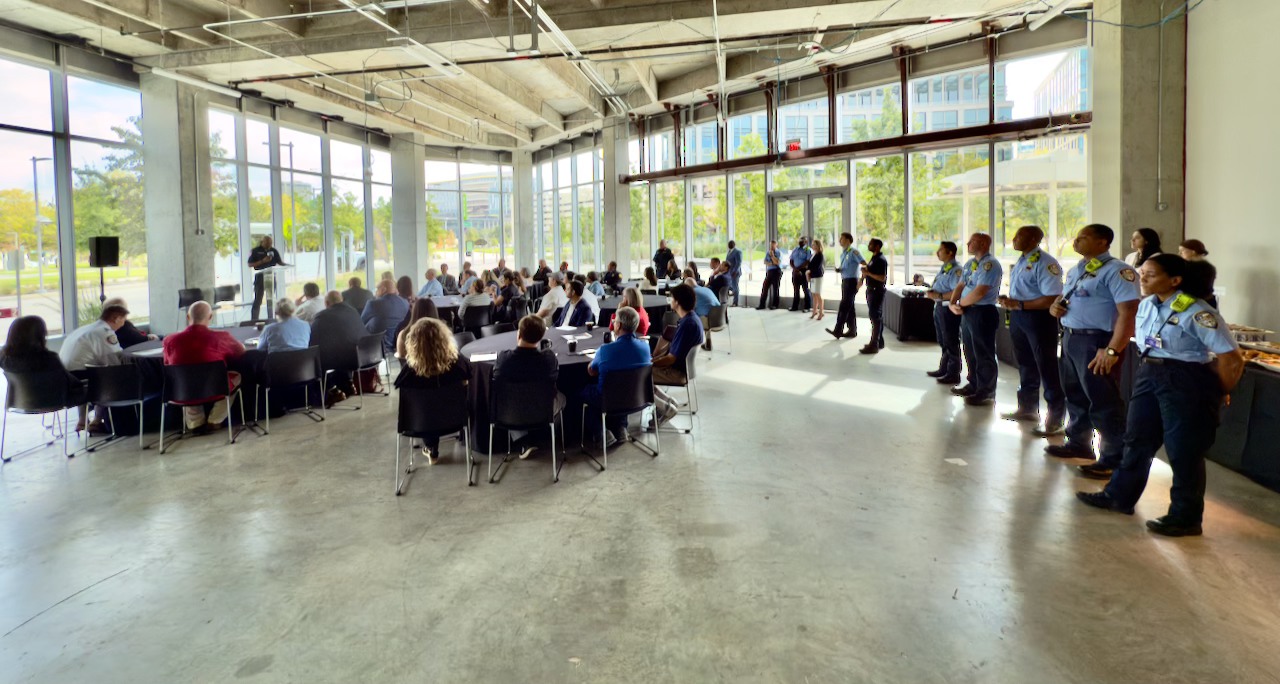
TSAFF is proud of Texas firefighters' evolving partnership with UTHealth Houston / UTHealth Houston School of Public Health on a new study of cancer in the fire service. Today, TSAFF President John Riddle joined firefighters Homer Salinas of Mission L-3606 and Jesse Perez of Brownsville L-970, among others, to help kick off the research program. Here are President Riddle's remarks:
“Good morning, and thank you all for being here.
“Today marks an important milestone for the health and safety of Texas firefighters.
“With the creation of this cancer research program, we are taking a decisive step toward understanding — and ultimately reducing — the occupational cancers and other diseases faced by too many of our brothers and sisters in the fire service.
“The goal of this comprehensive research is clear: To identify which groups of firefighters are most at risk and to develop policies and programs that protect their health.
“Texas firefighters are deeply grateful to our state leaders for making this a priority.
“We especially want to thank Senator Brandon Creighton—whose leadership and commitment doubled the original funding — as well as Representative Jared Patterson, Representative Stan Kitzman, Representative Armando Martinez, and Representative Lacey Hull.
“Their support sends a powerful message: the lives and well-being of Texas firefighters matter.
“We also are proud of the partnership with UTHealth Houston’s Southwest Center for Occupational and Environmental Health and Dr. Jooyeon Hwang, whose expertise will guide this research.
“And we recognize the hard work of our TSAFF legislative team and the dedicated members of Houston Professional Fire Fighters Association, whose support helped turn this idea into reality.
“Our higher prevalence of cancer and the greater chance of dying from it, make the need for this research urgent.
“Many of these cancers are presumed to be job-related and already cost millions of dollars each year in workers’ compensation benefits—beyond the incalculable human toll on our families and communities.
“While we’ve made progress — cleaning gear more thoroughly and ventilating our stations, for example — we still face increased risks.
“This research will be essential to set best practices for the future.
“Texas firefighters remain moved by the story of Mission firefighter and occupational cancer survivor Homer Salinas, who reminds us what is at stake.
“Homer’s fight — and the support he found from his family and the fire service — underscores why this research matters.
“But Homer is not alone. We must do everything we can to protect the next generation of firefighters from the same risks.
“Today we reaffirm a simple promise: Those who risk their lives to protect our communities deserve every protection we can give them. This research program is a powerful step toward fulfilling that promise.
“Thank you to everyone who made this possible—and to every Texas firefighter whose commitment to the fire service and their community inspires us to keep fighting for a safer, healthier future.”